FPGA PCN and End-of-Life Notices: A Buyer’s Verification Checklist

An FPGA lifecycle review starts with the complete ordering code, an official manufacturer notice, and its current revision. Keep a separate record of the supplier's offer. A lifecycle notice describes a product decision; a quotation describes a proposed purchase. Both records matter when deciding how to support an existing design.
This guide provides a buyer's review process. It does not assign a lifecycle status to any FPGA family or verify stock held by a seller.
Separate a product change from a product discontinuation
A product or process change notification, usually called a PCN, announces a change. An end-of-life notification communicates product discontinuance. Microchip's notification system makes this distinction and also identifies initial, final and cancellation notices. A PCN heading alone is therefore insufficient to conclude that a part is being discontinued. Microchip PCN/EOL guidance
Start by recording the document type and the action it asks the customer to take. Route a manufacturing or specification change to the person responsible for evaluating its effect on your design. Route a discontinuation notice to procurement and engineering together, so that purchasing deadlines and redesign work can be considered in one review.
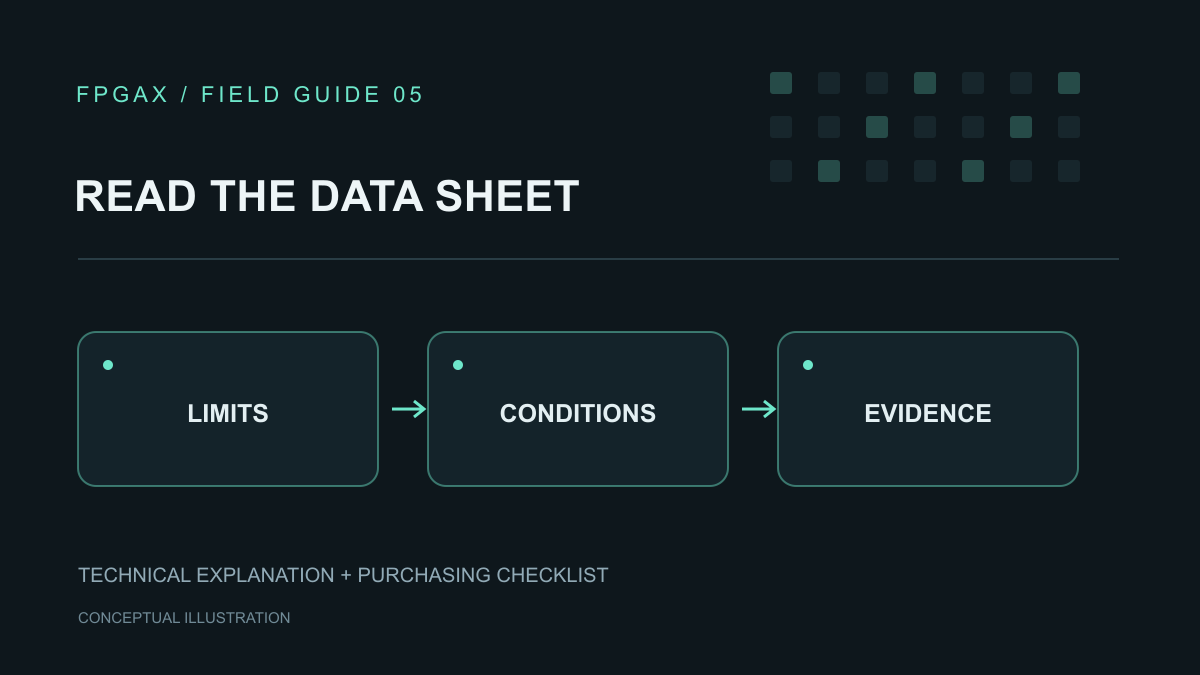
Use three separate questions:
- Does this notice affect our exact ordering code?
- What purchasing or engineering action does the notice require?
- What evidence supports the proposed supply plan?
A single spreadsheet cell marked “obsolete” cannot answer all three.
Match the full part number and the document revision
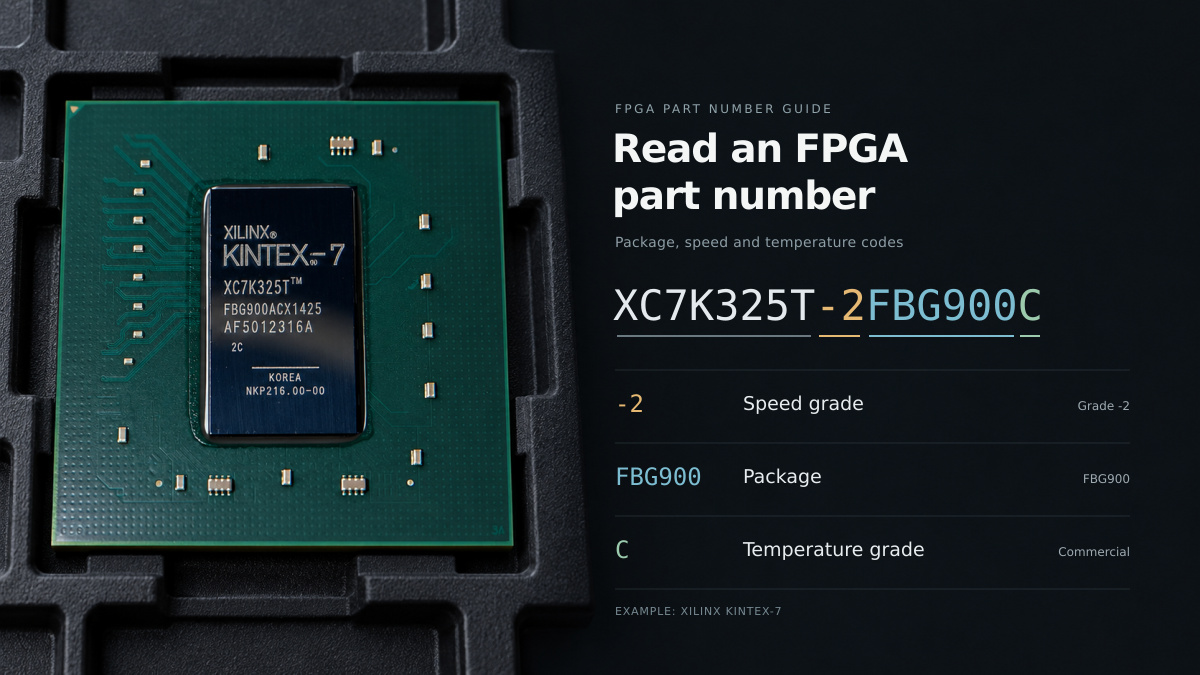
Copy the manufacturer part number from the approved bill of materials. Preserve its package, speed, temperature and other ordering suffixes. Keep your internal stock code in a different field.
Search the manufacturer's own notification system and inspect the affected-parts attachment. AMD provides a part-number search for adaptive-computing discontinuation notices. Microchip directs customers to the affected catalog-part-number lists attached to its notices. AMD discontinuation lookup · Microchip affected-parts guidance
Save the notice identifier, revision, source URL, affected-parts attachment and the date you checked them. Record the exact row or entry that matches your part. If the document only names a family and you cannot establish whether the ordered variant is included, keep the status unresolved and request clarification from the manufacturer.
Microchip explains that a notification's issue date may be the most recent revision or reissue date; its revision history records earlier versions. Check that history before acting on a forwarded PDF or an old email attachment. Microchip revision guidance
Keep order and shipment deadlines separate
The last-time-buy or last-order-acceptance date concerns placing final orders under the stated terms. The last-time-ship date concerns final shipment. Enter them in separate fields and retain any conditions printed beside them.
Microchip's current EOL policy says notices specify last-time-buy and last-time-ship dates, or the earliest possible EOL dates. It also explains that the available period depends on supplier availability or inventory and the earliest EOL date may coincide with the notification date. A standard purchase window should not be assumed for every notice. Microchip EOL policy
For internal planning, set a review deadline before the manufacturer's relevant cutoff. Leave time for demand approval, quotation review and any unresolved technical questions. This is a planning recommendation, not a manufacturer notice-period rule.
If a date field says “not applicable,” preserve that wording and seek clarification where needed. Do not replace it with an estimated deadline merely to complete the spreadsheet.
Read the scope of a notice before extending its conclusion
Altera's PDN2410, revision 1.0.0, issued July 26, 2024, is a useful historical example. Its stated scope is selected development-kit ordering codes, and its two key obsolescence-date fields are marked “Not Applicable.” Altera PDN2410, page 1
That document should be read as a notice about the listed development kits. It does not, by itself, establish discontinuation of every FPGA used on those boards. The same discipline applies when a notice concerns a package option, tool or accessory. Match the subject of the notice to the item on your BOM before drawing a conclusion.
This example illustrates document interpretation. It is not a statement about today's availability of the listed kits or their component devices.
Build a short evidence register
The following worksheet is an editorial recommendation for organizing a purchasing review. It is not an official manufacturer form.
| Record | What to retain | Question it resolves |
|---|---|---|
| Approved requirement | Full ordering code, quantity and required delivery date | What are we trying to buy? |
| Manufacturer notice | Identifier, revision, official URL and affected-parts entry | Is this exact item covered? |
| Dates and conditions | Order cutoff, shipment cutoff and relevant qualifications | What action is time-sensitive? |
| Supplier offer | Quoted ordering code, quantity, validity and delivery terms | What is actually being offered? |
| Supply evidence requested | Available traceability, packaging information and inspection documents | What evidence must we assess before acceptance? |
| Alternative review | Candidate code, outstanding differences and engineering decision | Has a substitution been approved? |
| Review ownership | Responsible person, decision date and next check | Who closes the remaining questions? |
Treat a blank field as an open question. This helps prevent an unconfirmed delivery estimate from becoming an accepted commitment when the record passes between colleagues.
Evaluate proposed alternatives separately
An EOL notice may list a replacement, or direct customers to a sales contact. Microchip's policy distinguishes drop-in replacements, functionally equivalent options with differences, and cases where a replacement is unavailable. Microchip transition guidance
Give each proposed alternative its own review record. Ask engineering to document the applicable checks and approval before purchasing it as a substitute. The word “replacement” on a quotation should not silently change the approved BOM.
If the plan is to retain the original part, ask the supplier to quote that full code and describe the supporting documents available for the offered lot. Lifecycle research alone cannot establish the authenticity, condition or delivery of a particular lot.
Prepare the sourcing request
Send the full ordering code, required quantity, delivery requirement and the relevant manufacturer notice. State whether alternatives may be proposed and identify who must approve them. Request a clear distinction between confirmed offer details and items that still require verification.
You can include these details in a request for quotation to FPGAX. Keep the manufacturer's lifecycle evidence and the supplier's written offer together when reviewing the response.