How to Prepare an FPGA RFQ: A BOM Checklist for Clear Quotations
A useful FPGA request for quotation tells the supplier exactly which item you need, how many units you need and when you need them. It also explains which differences require your approval. The aim is to receive offers that can be compared without guessing what either side meant.
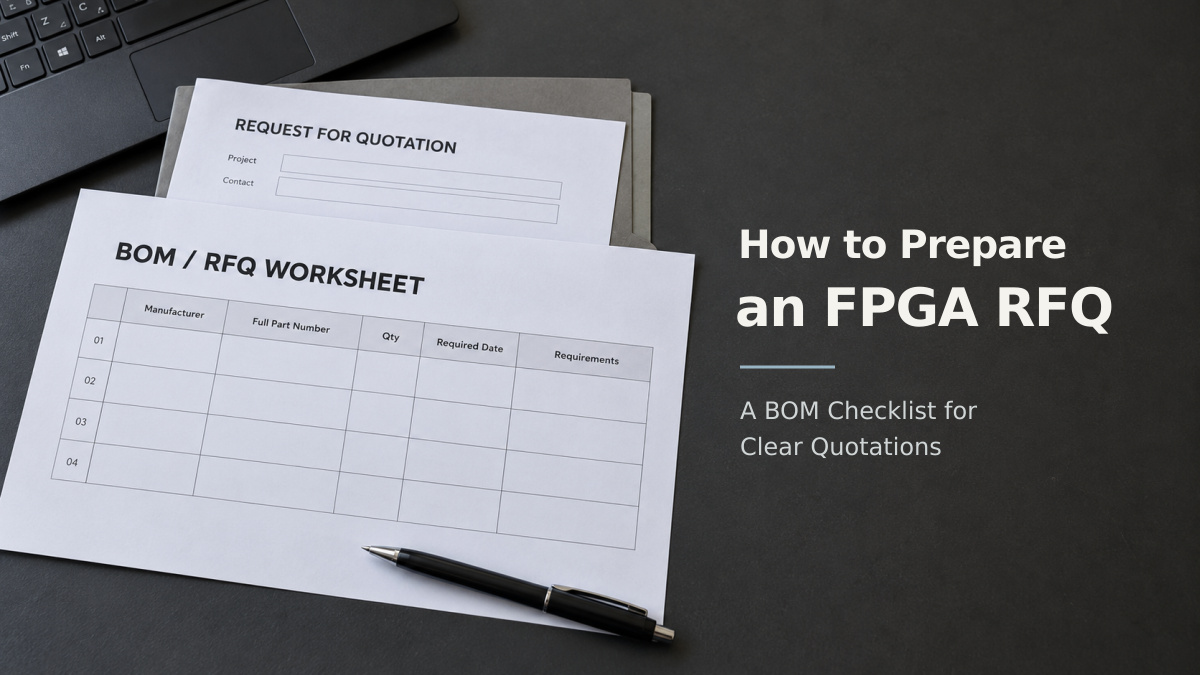
Prepare one controlled request, give it a revision identifier and keep the response linked to that version. The worksheet below is our recommended purchasing format. It does not describe mandatory fields or service terms on any supplier's website.
Establish the requested item before asking for a price
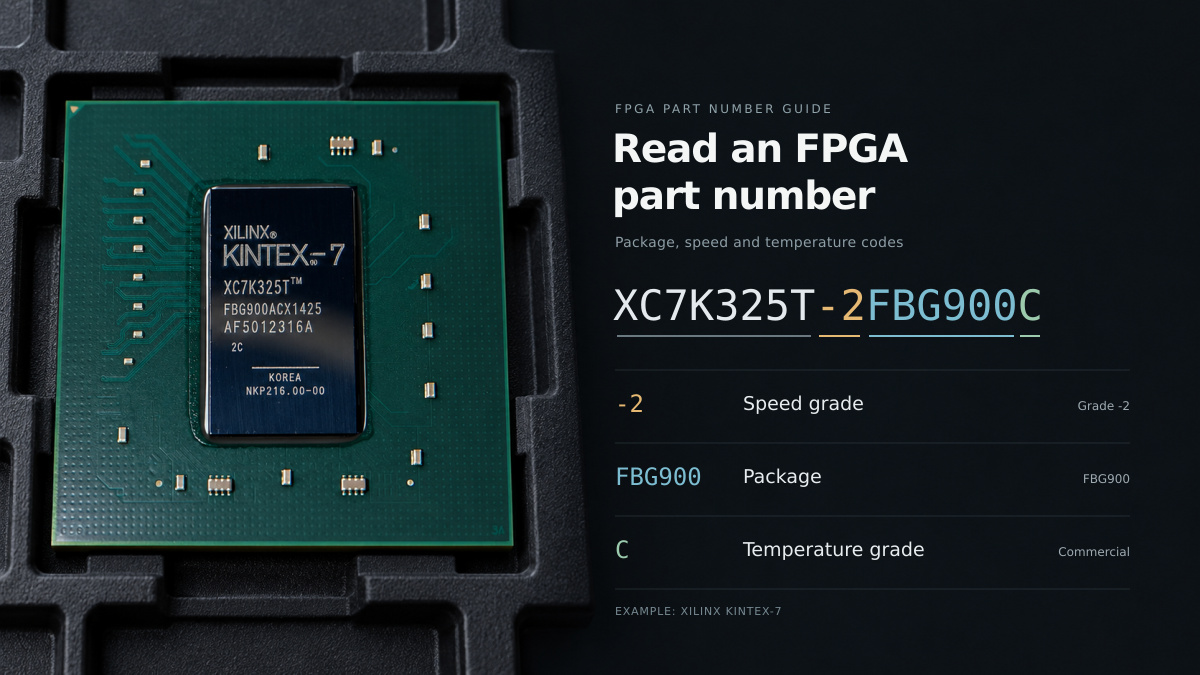
Copy the complete manufacturer part number from the approved BOM. Put the manufacturer name and your internal stock code in separate columns. Include package, speed and temperature suffixes in the requested number; mark unresolved characters as questions.
Use the reference for the relevant product family when checking the code. Lattice's Part Number Reference Guide directs readers to separate family numbering systems. Treat a familiar-looking suffix as something to verify.
Keep your internal item number available for matching replies, but identify it as internal. As a manufacturer example, TI's quotation template separates the supplier product identifier from the customer product identifier and requested quantity. Those are TI's fields, not FPGAX requirements. TI quote request documentation
If engineering has not resolved the full ordering code, ask for clarification before requesting a firm offer against an assumed variant. You can still discuss options, provided the request says the selection is provisional.
State what the quantity means
Give the requested purchase quantity in individual components. State separately whether you want price options for additional quantities. If a forecast is included, label it as a forecast and say whether it represents a separate enquiry.
For example, a fictional request might ask for 40 units for one build and price options for later orders of 100 or 250 units. These are three quotation quantities. They should not become a demand for 390 units unless the buyer says so.
Ask the supplier to identify minimum-order quantities, package quantities or other quantity conditions in the response. Leave requested quantity unchanged if the offer differs; enter the offered quantity alongside it.
This preserves the information needed to decide whether buying extra units is acceptable.
Define the date and destination
“Urgent” gives little information for planning. State the requested arrival date and destination, and identify whether that date is a firm project requirement or a target.
Ask the supplier to distinguish an expected shipping date from an expected arrival date. If the schedule is still unconfirmed, request that status explicitly. Record when the estimate was supplied.
For staged delivery, list each quantity and requested arrival date separately. State whether a partial shipment is useful. A supplier should not have to infer that 20 units arriving earlier would solve a requirement for 100 units.
Include the destination country and the delivery location detail needed for the quotation. Request a clear statement of what the quoted price includes. Currency, freight and other quoted charges should remain visible when offers are compared.
Make alternative-part permissions explicit
Choose a clear instruction for each line: exact part only, approved alternatives listed, or proposals invited for engineering review.
If an alternative is already approved, provide its full code and the approval reference. If proposals are welcome, ask the supplier to present each candidate separately with an explanation of the difference. Keep the requested part unchanged in the response table.
Our recommended wording is:
Quote the requested part first. List any proposed alternative on a separate line. Substitution requires our written approval.
This wording expresses the buyer's requested process. It does not establish a supplier's acceptance of that process. Review the returned quotation and resolve any conflicting conditions before placing an order.
Request evidence that your team can review
List the documents needed to evaluate an offer. Depending on your purchasing requirements, these might include packaging-label information, available lot or date-code details, supply records, or a specified inspection report.
Explain whether each item is needed with the quotation, before shipment or at receipt. Ask the supplier to identify unavailable information rather than leaving an ambiguous blank.
Avoid vague requests such as “all certificates.” Name the document, its issuer if relevant, and the part or lot it must cover. Let your quality team define acceptance requirements. A document request alone does not establish that the offered goods meet them.
A worksheet for one RFQ line
| Field | What the buyer provides | What the supplier should clarify |
|---|---|---|
| Request reference | RFQ revision and line identifier | Corresponding quote line |
| Item identity | Manufacturer and complete requested code | Exact offered code |
| Internal reference | Buyer item number | Reference repeated for matching |
| Quantity | Purchase quantity and separate price options | Offered quantity and quantity conditions |
| Schedule | Requested arrival date and destination | Shipping/arrival estimates and confirmation status |
| Alternatives | Permission and approval route | Each proposed difference |
| Evidence | Named documents and when they are needed | Availability, issuer and scope |
| Commercial basis | Requested currency and delivery basis | Price inclusions, charges and validity |
| Open questions | Unresolved information and decision owner | Specific response or clarification |
Use an attachment or message if the enquiry form has no matching field. Keep the completed worksheet with the submitted request.
Check the response against the request
Compare the returned part number character by character. Check quantity, schedule, alternatives and evidence availability before comparing headline prices. Carry any exception into a visible question list.
Save both the original quotation and your comparison notes. If you change the request, issue a revised version and identify the affected lines. Ask the supplier to confirm which version its response covers.
When the request is ready, send the part number and quantity to FPGAX. Include the target date and any conditions that will affect your purchasing decision.