Blogs

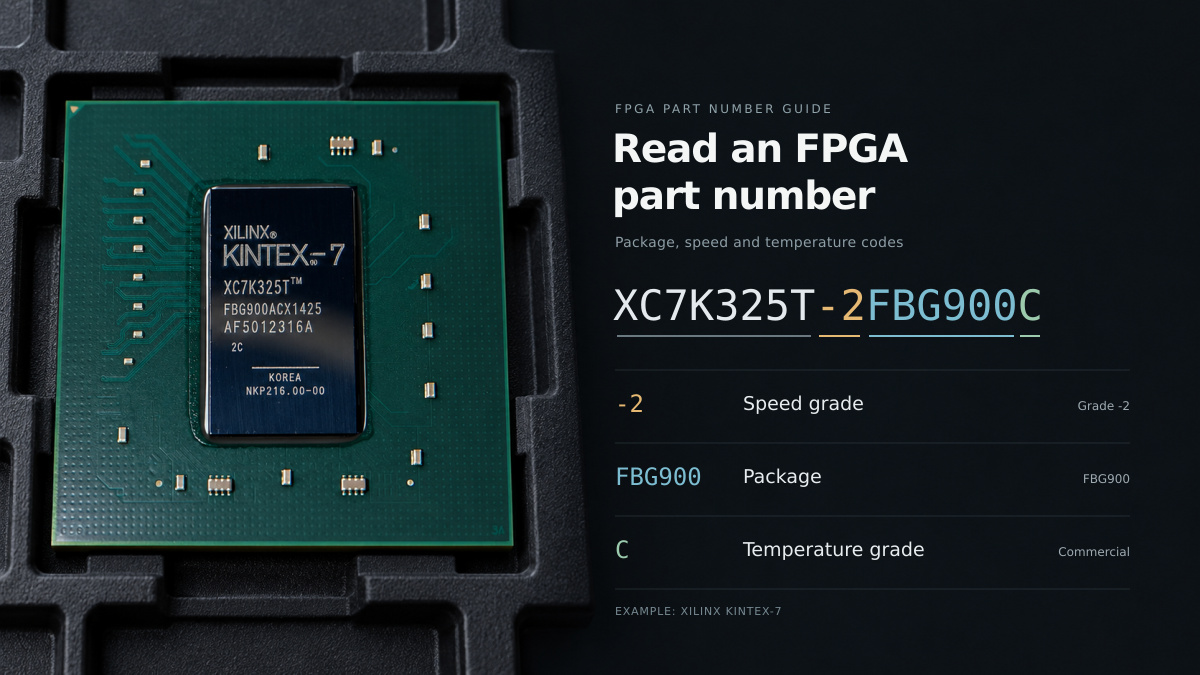
How to Read an FPGA Part Number: Package, Speed and Temperature Codes
2026.10.05 How to Read an FPGA Part Number: Package, Speed and Temperature Codes Use a documented Kintex-7 example to understand FPGA ordering fields, then check the package, timing and operating-temperature requirements before requesting a quotation.
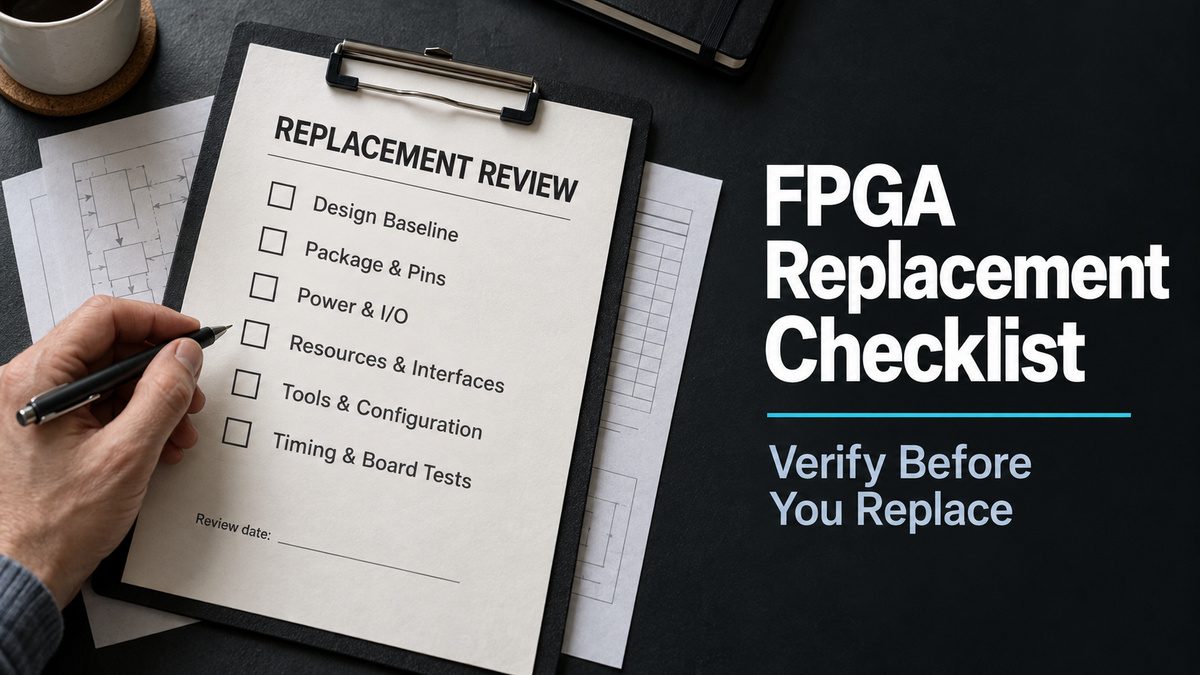
FPGA Replacement Checklist: What to Verify Before Changing a Part
2026.10.05 FPGA Replacement Checklist: What to Verify Before Changing a Part A matching package is only the first check. Use this worksheet to separate a sourcing candidate from an engineering-approved FPGA replacement.
FPGA PCN and End-of-Life Notices: A Buyer’s Verification Checklist
2026.10.05 FPGA PCN and End-of-Life Notices: A Buyer’s Verification Checklist Match manufacturer notices to exact FPGA ordering codes, separate purchase deadlines from shipment dates, and keep lifecycle evidence distinct from supplier offers.
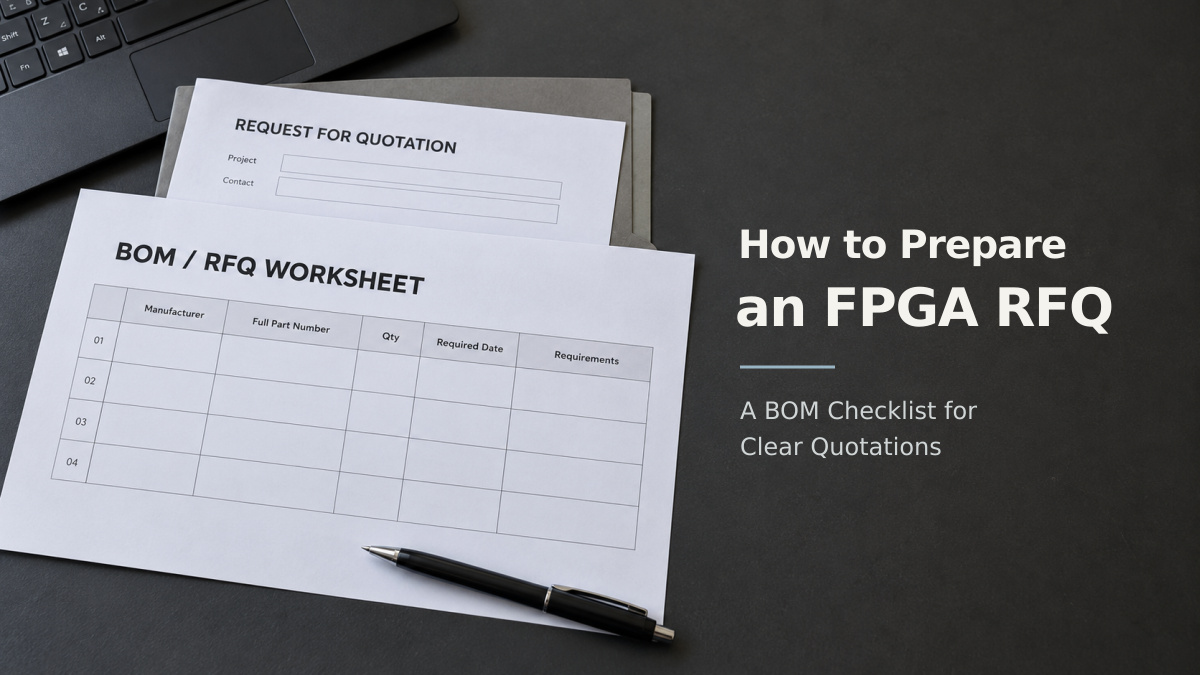
How to Prepare an FPGA RFQ: A BOM Checklist for Clear Quotations
2026.10.05 How to Prepare an FPGA RFQ: A BOM Checklist for Clear Quotations Build a clear sourcing request and compare the returned offer against the same part, quantity, schedule and approval requirements.
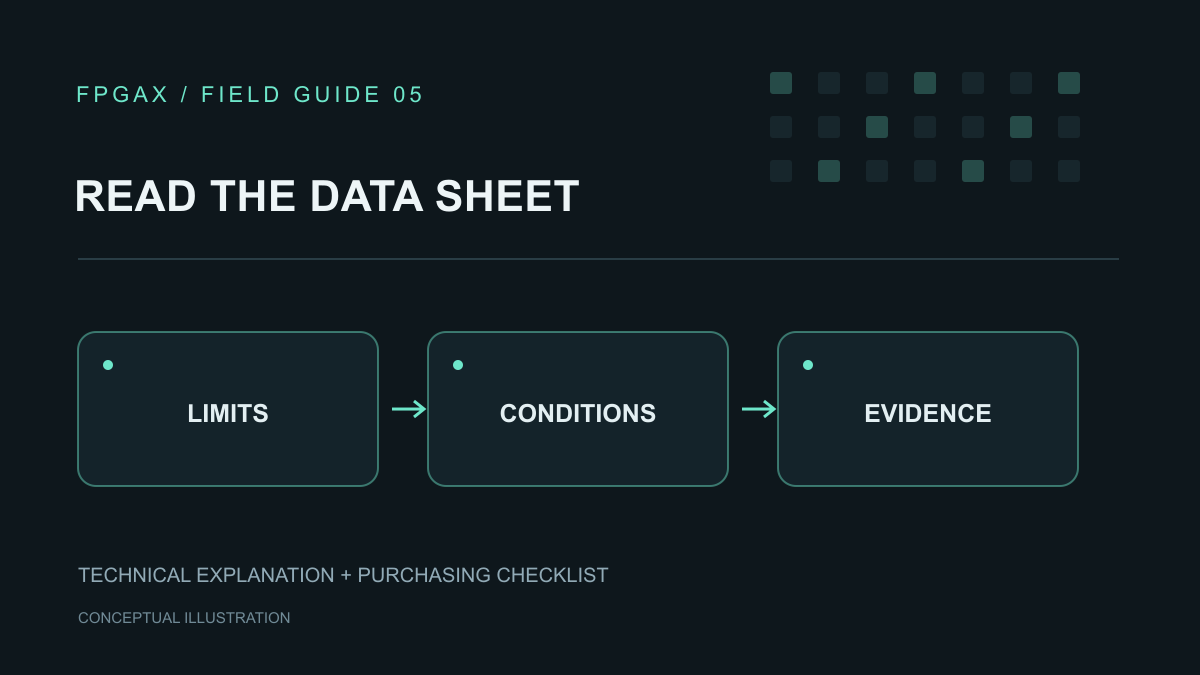
How to Read an FPGA Data Sheet for a Sourcing Decision
2026.10.05 How to Read an FPGA Data Sheet for a Sourcing Decision Turn an FPGA data sheet into a decision record: find the right document, preserve its conditions and separate an open engineering question from an approved specification.
FPGA, CPLD or SoC FPGA: Questions to Ask Before Shortlisting
2026.10.05 FPGA, CPLD or SoC FPGA: Questions to Ask Before Shortlisting Start with the system's responsibilities, then compare specific device families. Use this worksheet to examine startup, software, interfaces and the evidence behind an architecture shortlist.
FPGA Logic, Memory and DSP Resources: Building a Requirements Table
2026.10.05 FPGA Logic, Memory and DSP Resources: Building a Requirements Table Plan FPGA capacity around the workload. This guide separates logic, memory organization and arithmetic requirements from estimates and measured implementation use.
FPGA I/O Banks and Voltage: What to Check Before Choosing a Package
2026.10.05 FPGA I/O Banks and Voltage: What to Check Before Choosing a Package Build an interface-to-bank matrix before choosing an FPGA package. Check the actual signal direction, reference voltage, termination conditions and package pins.
FPGA Transceivers and GPIO: Check the Interface Your Design Needs
2026.10.05 FPGA Transceivers and GPIO: Check the Interface Your Design Needs A user-I/O count cannot establish whether an FPGA can implement your serial link. Build an interface record that connects protocol requirements to usable hardware.
FPGA Configuration Memory: Questions to Resolve Before Ordering
2026.10.05 FPGA Configuration Memory: Questions to Resolve Before Ordering Configuration bit count is only one input to a memory decision. Document how the board boots, what each image contains and how the exact memory is programmed.
Legacy FPGA Toolchains: Check Device, IP and Build Support
2026.10.05 Legacy FPGA Toolchains: Check Device, IP and Build Support Finding a tool download is only the start. Preserve the original project and demonstrate the build and programming path needed to maintain an older FPGA design.
FPGA Date Codes and Traceability: What Evidence Can Establish
2026.10.05 FPGA Date Codes and Traceability: What Evidence Can Establish Read date and lot information using the correct manufacturer reference, then connect each document to the offered material without treating paperwork as authentication.
FPGA Packaging and Moisture Documentation: A Receiving Checklist
2026.10.05 FPGA Packaging and Moisture Documentation: A Receiving Checklist Preserve each container’s identity and handling history, assign unresolved questions and pass usable records to the storage and assembly teams.
Cleaning an FPGA BOM: Missing Suffixes, Duplicate Lines and Alternatives
2026.10.05 Cleaning an FPGA BOM: Missing Suffixes, Duplicate Lines and Alternatives Use a fictional before-and-after example to distinguish formatting corrections, unresolved part identities, repeated exports and engineering substitutions.
FPGA Production Release: Records for Engineering and Purchasing
2026.10.05 FPGA Production Release: Records for Engineering and Purchasing Connect the approved FPGA design to the parts purchased and the files programmed. Use a release record that engineering, purchasing and manufacturing can follow.
How does reconfigurable technology break functional boundaries
2025.01.15 How does reconfigurable technology break functional boundaries The flexible evolution of hardware architectureAlthough traditional ASics (Application-Specific Integrated Circuits) can achieve efficient processing of specific tasks, their "one-time molding" feature…
How do biosensors reshape the data collection paradigm
2025.01.15 How do biosensors reshape the data collection paradigm In the fields of medical diagnosis, environmental monitoring and food safety, a revolution in data collection is quietly taking place at the micro scale. Unlike traditional physical signal capture, bio…
The breakthrough in heat dissipation technology for power devices
2025.01.15 The breakthrough in heat dissipation technology for power devices In the core systems of new energy vehicles, data centers and 5G base stations, power devices are facing unprecedented heat dissipation challenges. When the power density of IGBT modules exceeds 15kW/cm…

How does electromagnetic compatibility technology safeguard the stability of modern systems
2025.01.15 How does electromagnetic compatibility technology safeguard the stability of modern systems In 5G communication, autonomous driving and industrial automation systems, a smokeless "signal war" is quietly unfolding. When countless electronic signals interweave and collide in space, electromagne…
All Category
Blog
Featured Parts More